
1- An Introduction to Winding Road Podcast
I started the Winding Road podcast in 2018 because I have always been tempted to speak and be heard. Since my school days, radio programs have captivated me with their stories, songs, and poetry readings. I once aspired to be a radio announcer, but that dream faded until podcasts emerged. This new medium reignited my passion, allowing me to produce and edit my own programs.
On this journey, I launched my first program, “Nowruznameh,” a project that might have been a bit rough in its early stages. Since then, I have delved into travelogues from the ancient world, the Bisotun inscription, pre-Islamic travelogues, Ibn Fadlan, as well as 19th-century European travellers, including Edward Brown and Arthur Gobineau, and so on. Each of these explorations has been a personal journey, a connection to the past that I am excited to share with you.
In the first episode, I discuss the reasons for starting this project, the meaning behind its name, and what this journey means to me. I am excited to share my joy of reading with you, and I hope you will enjoy listening to the episodes.
Two Directions of the Journey
Winding Road podcasts categorizes podcasts into two groups: Iranians travelling abroad and foreigners travelling to Iran. Episodes that don’t fit into these categories are featured on the main page, offering a diverse range of content. These include “Turan Khanum in Ottawa,” which reports on the documentary screening of Turan Mirhadi in Ottawa, and “Journey of a Shadow,” a story by Hans Christian Andersen. Each episode is a unique journey waiting to be explored.

Iranians Abroad

Foreigners in Iran
2- Travelogue as a Literary Genre
In one of the Clubhouse sessions of the Ancient Literature Club, I decided to explain the genre of travelogue writing before we began reading travelogues. In this episode, I defined the genre, discussed its various types, and provided a brief history of the earliest travelogues related to Iran. Additionally, I highlighted the significance of Iran’s geography in these historical travelogues.
3- Travel of a Shadow
Have you ever heard of a shadow being separated from its owner? What happens to that shadow in such a case? Can it become an independent character and even dominate its owner? It’s said that mothers tell their children stories, but in my case, it was my daughter who shared stories with me. One of those stories was “The Shadow” by Hans Christian Andersen. It is a beautiful tale about a journey to a hot desert land, where the shadow becomes separated from its owner. A few mornings later, it returns, but with a different sense of awe and character
4- Touran Khanom in Ottawa
Rakhshan Bani-Etemad and Mojtaba Mirtahmasb have done a remarkable job with their documentary series “Karistan,” which highlights the creative and entrepreneurial individuals of our motherland, Iran. They have now focused on an enduring figure in modern Iranian education in their documentary “Turan Khanum,” which serves as a portrait of this influential educator. Unfortunately, her research contributions have not received the recognition she deserves.
Turan Mirhadi left behind valuable works, such as the “Children and Adolescents encyclopedia,” which can be considered a national treasure in the education and upbringing of children in our country. At the heart of this documentary is an 85-year-old woman who has embraced a vibrant childhood. Throughout her life, Turan Mirhadi has worked tirelessly to create a more beautiful and peaceful world for children. Her vision extends beyond the realm of childhood, encompassing the human experience from a child’s point of view. She has sought to replace competition with values such as friendship, empathy, and collaboration within our education system.
To achieve her goals, Turan Mirhadi faced numerous challenges in both her personal and professional life. These included the heartache of her first husband’s execution, the loss of her brother, and the tragic death of her young son, along with countless obstacles in her academic and professional pursuits. Despite these hardships, she consistently recalled a piece of advice from her mother that helped her persevere: “Turn great sorrows into greatdeeds.” This wisdom encapsulates Turan Mirhadi’s philosophy and serves as a powerful message in the documentary.
On March 8, 2019, the University of Ottawa hosted a screening of Turan Khanum in Ottawa. In this podcast, you’ll listen to the winding road of the documentary’s journey from Tehran to Ottawa.
5- Alexander’s Footprint - Eslam Kazemieh
I read the book I have chosen in three sessions in 1403 at the Club House, aiming to share its insights with fellow enthusiasts.
In the introduction, I first briefly introduced Islam Kazemiyeh (1309-1376): a writer, political activist, one of the organizers of Goethe’s poetry nights, and an intellectual who followed Jalal Al-Ahmad. He was also friends with Shams Al-Ahmad. He left Iran in the years after the revolution. But he could not stay away from Iran for long. In the land of exile, he accompanied Dr. Ali Amini in the hope of returning and building his ideal land. With the death of Dr. Amini, he did not last long either, due to financial problems and homesickness, he decided to commit suicide and ended his life.
Then I talked a little about Sistan and the Balochi language, emphasizing their cultural importance as highlighted in the book Taxonomy of Iranian Languages.
The book The Footprints of Alexander is a journey that the late Islam Kazemiyeh made to Sistan and Balochistan on Eid 1351. I encourage you to imagine yourself in those years, fostering nostalgia and a deeper connection with the story. This book will be in three parts. The Balochi song in these three parts is composed by Ustad Shir Mohammad Espandar.
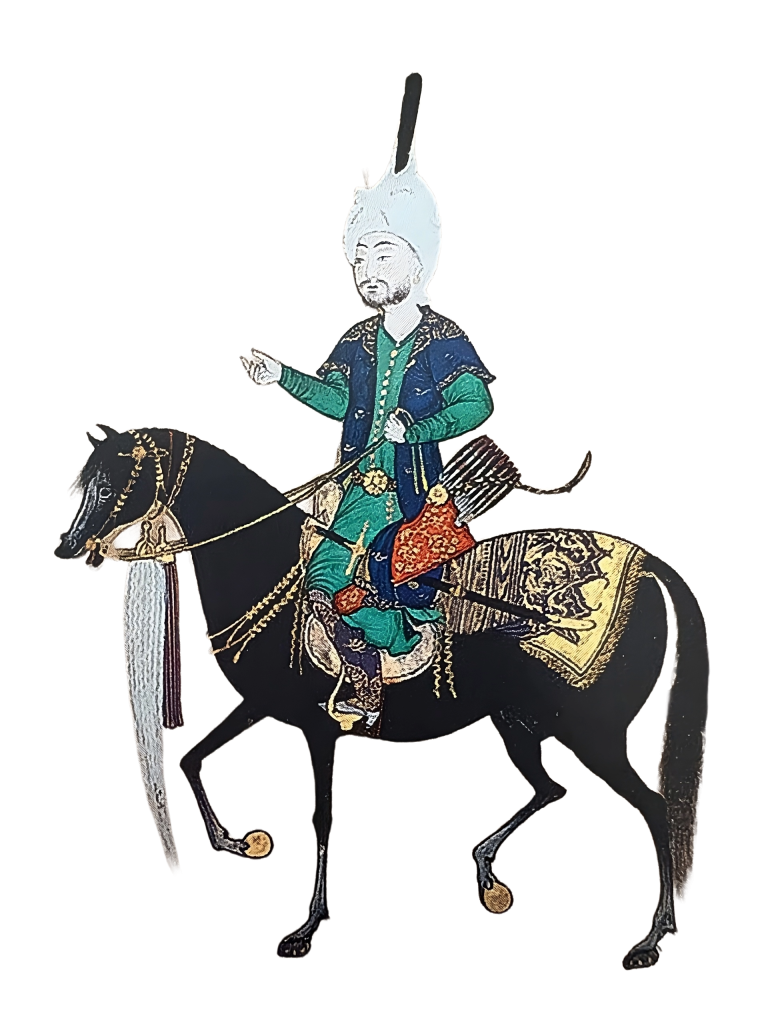
*Hero image includes details from Iranian miniature paintings in the Shahnameh of Shah Tahmasp (16th century), reproduced from publications by the Tehran Museum of Contemporary Art for educational purposes.