
Iranians Abroad
Journeys from Persia to the World (Farang)
Discover the voices of Iranians who ventured beyond their homeland
For generations, Iranians have journeyed beyond their homeland seeking knowledge, art, refuge, and new beginnings. In this part of the Winding Road Podcast, we follow their paths across continents, listening to their reflections on identity, belonging, and the meaning of home.
Each episode captures how Persian culture travels and transforms through new landscapes. These stories, told in foreign cities and familiar accents, reveal the resilience of those who carry Iran within them bridging worlds through memory, language, and experience.
Featured Episodes
Listen to how journeys beyond borders redefine identity, and how Iranians carry the essence of home wherever they go.
1- Silsal-e-Tawarikh (Ibn Siraf’s Travlogue)
Silsal-e-Tawarikh, also known as “Akhbar al-Sin wa al-Hind” (The Chronicles of China and India), was authored by the merchant Sulayman Sirafi and Abu Zayd Hassan Sirafi in the 4th century AH. It details their travels and observations about the eastern lands, particularly China and India.
This work is considered one of the most significant historical, geographical, and mythological sources for the study of Orientalism and the wonders of the ancient world.Sulayman Sirafi, an Iranian merchant from the port of Sirafi, began documenting the sea voyages of sailors and the observations of merchants and travelers on the route to China and India in the 4th century AH.
Subsequently, Abu Zayd Hassan Sirafi not only compiled this work but also added additional material to it. Much of the geographical information contained in this.
2- Ibn Fadlan’s Travlogue
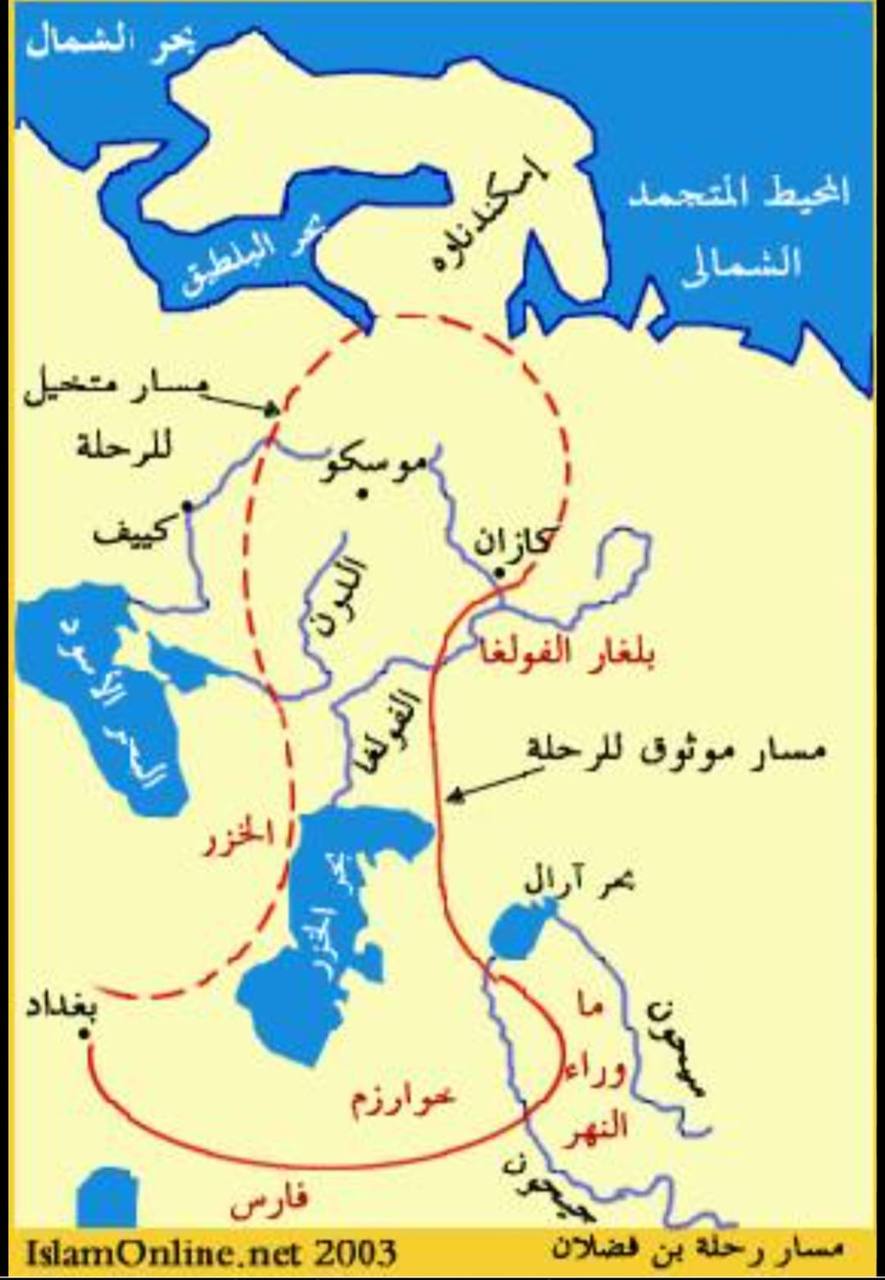
One of the oldest Arabic travelogues from the Abbasid Caliphate, dating back to the third and fourth centuries, is the Travelogue of Ibn Fadlan. Thistravelogue marks the first time that Caliph Muqtadir sent a delegation to the Saqlab (present-day Russia) to promote Islam and support Muslims who were under attack by the Khazar Jews .
The significance of this travelogue is highlighted by its impact on modern literature and film. For example, Michael Crichton wrote the novel Eaters of the Dead in 1976, and the film The Thirteenth Warrior was released in 1999. To learn more about this fascinating travelogue, I recommend reading the entry on Ibn Fadlan’s Travelogue in the Great Islamic Encyclopedia.
3- Nasir Khusraw's Travelogue
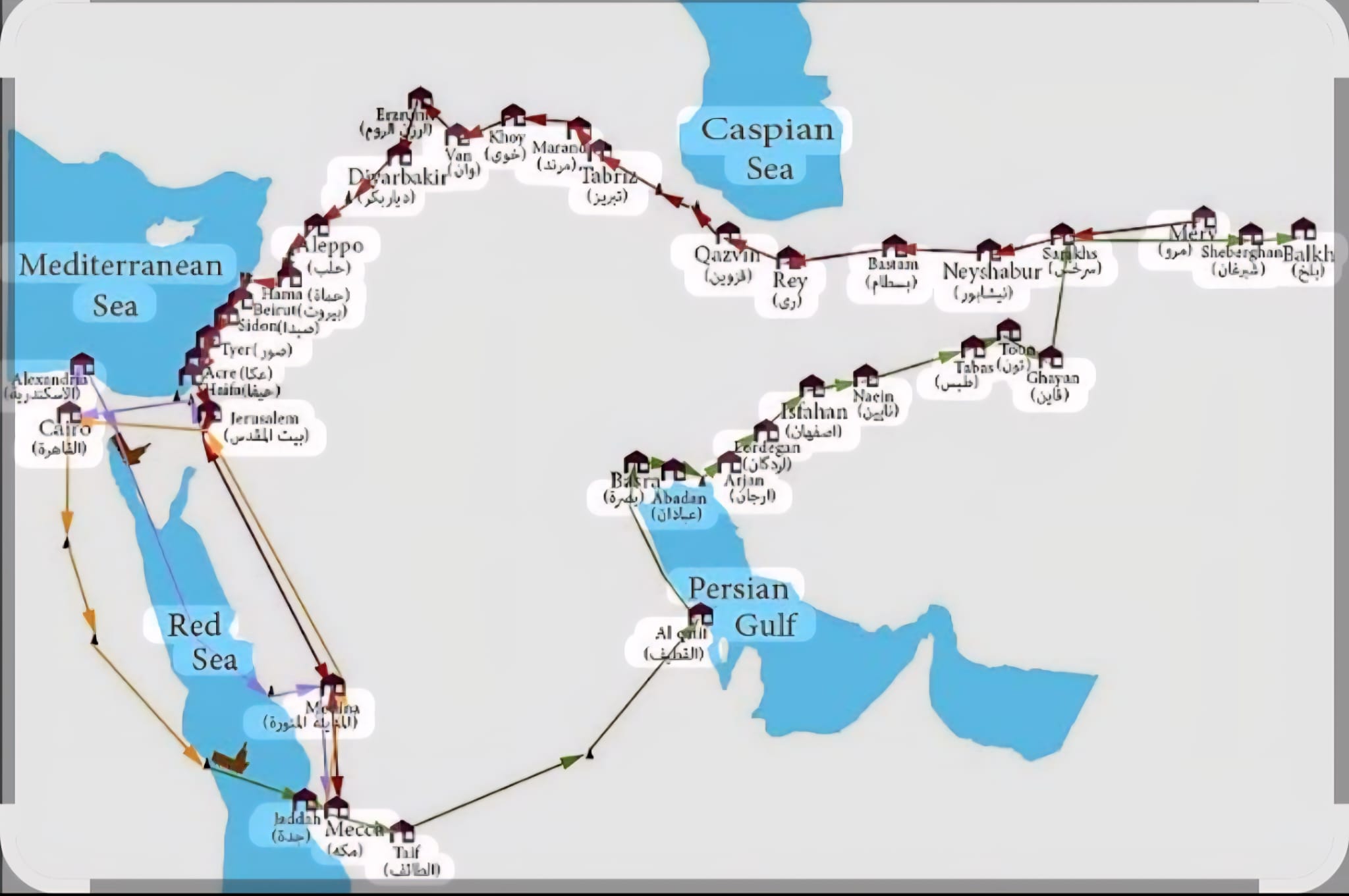
A detailed account of the Iranian sage who experienced a seven-year journey to Egypt, where he sought to join the Ismaili sect. Throughout his travels, he visited Mecca and Medina three times to perform the Hajj rituals. This work dates back to the fifth century AH. The journey begins with a dream that Nasir Khusraw describes at the outset, as he departs from Merv and concludes with his return to Balkh. However, the dream serves merely as a pretext for the journey itself.
The prose in this text is straightforward, based on notes taken during his seven-year trek through regions currently experiencing conflict and turmoil in the Middle East, including Iran, Turkey, Syria, Lebanon, Palestine, Egypt, Arabia, Sudan, and Yemen. Nasir Khusraw provides precise descriptions of certain cities and people, and shares fond memories of them, while he quickly dismisses others. As he approaches the Fatimid center in Egypt, he feels increasingly secure, which allows him to write more freely.
One of the notable aspects of the travelogue is its detailed depiction of daily life and urban environments, including architecture, sewage systems, trade and commerce, etc. This work has gained popularity in various podcasts and resonates with Persian-speaking readers. However, in the Winding Road Podcast, we focus on exploring travelogues from the perspective of the winding road of journey, although the temptation to appreciate the literary features remains while reading.
We also hosted Dr. Mohammad Tavakoli Saberi in two episodes of our podcast. Dr. Tavakoli Saberi retraced this entire route over three years in celebration of the millennium of Nasir Khusraw’s birth. His journey in the modern world culminated in the two-volume book, “The Journey of Return,” which won the Jalal Literary Award in 2014.
4- Reading Achaemenid Inscriptions
The inscriptions are among the most important historical documents of the Iranian history, which took a century and a half to decipher and translate first into European languages and then into Persian. The Cyrus inscription can perhaps be considered a travelogue to Babylon as the conqueror of Babylon. The Bisotun inscription can also be seen as Darius the Great’s travelogue. He describes how campaigns were launched to restore the Achaemenid dynasty to the throne. Let us keep in mind that travel has had its own meaning in every era: sometimes a journey to conquer and expand territory, sometimes a pilgrimage, and, as today, travel is so intertwined with our lives that it has become an inseparable part of daily life.
In eight sessions, with my expert friends, we read and analyzed several vital inscriptions of the Achaemenid dynasty. Among the participants in this program, I was honoured to host Dr. Mehrdad Malekzadeh, Dr. Esmaeil Matobkari, and Mr. Sabre Amiri Parian.
The first part introduces reading several inscriptions from the Achaemenid period, especially the inscription of Darius the Achaemenid. In this part, we read the inscriptions of Aryarmene and Arshameh from Pierre Lecoq’s Achaemenid Inscriptions. In addition, concerning the inscription on the Cyrus Cylinder, both explanations were taken from the book The Cylinder of Cyrus the Great, and I read Dr. Shahrokh Razmjou’s complete translation in this section.
Continue the Journey
Explore more journeys of foreigners who have traveled to Iran.
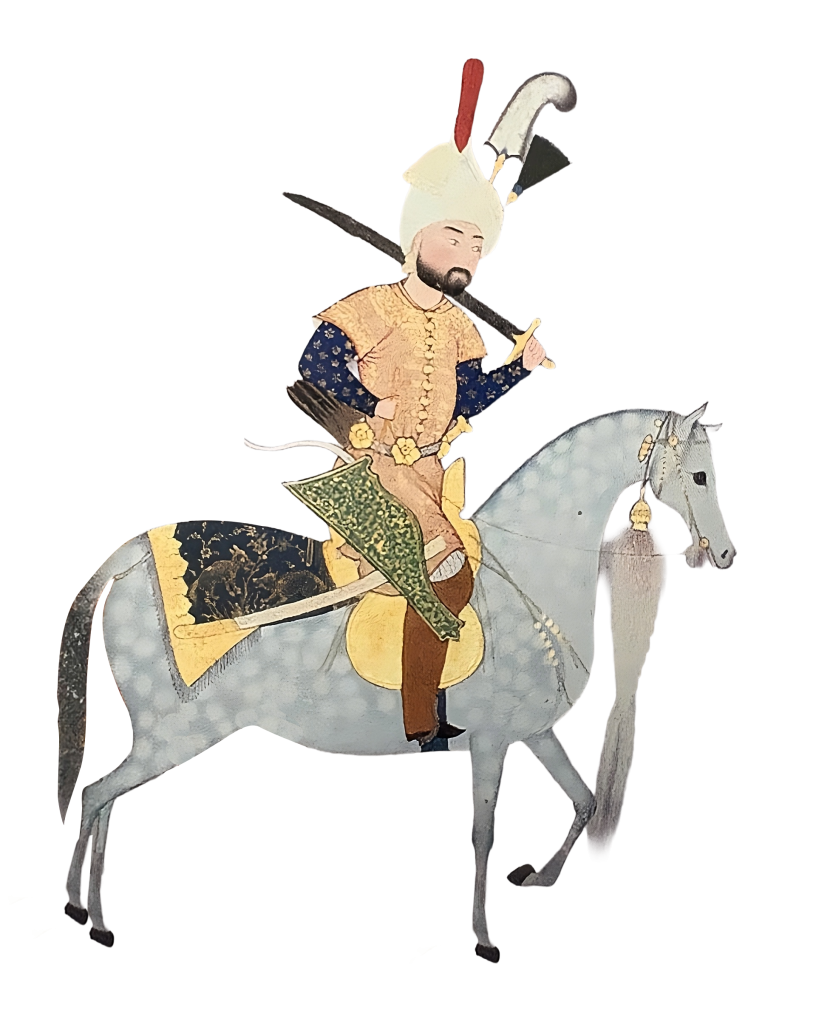
*Hero image includes details from Iranian miniature paintings in the Shahnameh of Shah Tahmasp (16th century), reproduced from publications by the Tehran Museum of Contemporary Art for educational purposes.